Thinking Christianly

Truth and reason for God's glory

Tag: Bible

Statement of Faith

The following is a statement of faith I wrote a few years ago. It’s fairly detailed and provides Scripture references for nearly every statement. While it’s personal in that it is what I believe, I think this is an accurate and useful summary of various doctrines taught in the Bible.

(PDF version: Statement of Faith – Brian Watson)

Revelation

God is spirit (John 4:24). He is immaterial and invisible (1 Tim. 1:17; 6:16). He cannot be detected through empirical observation or scientific experimentation. If he is to be known, he must reveal himself. Indeed, God has revealed himself in his world, his works, and his Word: both the written Word and the incarnate Word, Jesus Christ.

God’s revelation of himself in nature is called general revelation. God has revealed himself in all that he has created. The heavens declare his glory (Ps. 19:1). God’s eternal power and divine nature can be known clearly from creation, though sinful humans have suppressed this knowledge (Rom. 1:18-20). God has revealed himself in his providential care for his creation (Acts 14:15-17). God can also be known by the conscience that each human possesses (Rom. 2:14-15). God has put eternity into man’s heart, so that man knows there is more to reality than this mortal life (Eccl. 3:11).

Yet general revelation is not sufficient. It does not tell humanity exactly who God is. It cannot save anyone; it can only condemn. It leaves humanity without an excuse (Rom. 1:20). To know God truly, humanity would need to hear his voice.

Within the scope of biblical history, God spoke to several individuals. He spoke to Adam and Eve (Gen. 2:16–17; 3:9–19), Noah (Gen. 6:13–21), and Abram (Gen. 12:1–3), among many others, from Solomon (1 Kgs. 3) to Elijah (1 Kgs. 19) to some of the disciples (Matt. 3:17; 17:5; John 12:28).

God also revealed himself to individuals in dreams, as we see with Abimelech (Gen. 20:3–7), Laban (Gen. 31:24), and Solomon (1 Kgs. 3:5–14), and visions, as with Peter (Acts 10:9–16). Additionally, God appeared to some in physical manifestations, known as theophanies.  Most famously, he appeared to Moses (Exod. 33:17–34:9), who was able to see God’s “back.”  He also appeared to prophets such as Isaiah (Isa. 6).

Though in the Old Testament God revealed himself in these ways, and spoke to his people through the prophets, in the fullness of time he sent his Son, his true Word (John 1:1–8; Gal. 4:4; Heb. 1:1–2). Whoever saw Jesus saw the Father (John 14:9), for Jesus is the true image of God (2 Cor. 4:4; Col. 1:15).

Of course, these truths are revealed in God’s written Word, the Bible. All of Scripture is inspired, breathed out by God (2 Tim. 3:16). God’s Word is sufficient to make people wise for salvation (2 Tim. 3:15), and it gives eternal life (Ps. 119:93; John 6:68), in the sense that if a person believes God’s Word, he or she will be saved from sin and hell, be adopted by God the Father, be indwelled by the Holy Spirit, and live with the triune God forever. God’s Word is also useful for teaching, correcting, training, and equipping the Christian for a life of holiness and good works.

The Bible is the product of both God and man. Those who wrote Scripture spoke from God as they were carried along by the Holy Spirit (2 Pet. 1:19–21). Therefore, the Bible can say that the Holy Spirit spoke Scripture by the mouth of a human author (Acts 1:16; 4:25) and that the words of Scripture are the words of Christ (Heb. 10:5). Paul calls both Old Testament and New Testament writings “Scripture” (1 Tim. 5:18; cf. Deut. 25:4; Matt. 10:10; Luke 10:7), and Peter refers to Paul’s writings as Scripture (2 Pet. 3:15–16; see also 1 Thess. 2:13). Therefore, we conclude that the entire canon of Scripture is God-breathed, written by the hands of humans, but directed by God so that each word written was exactly what God intended. The various modes of Scripture writing range from dictation from God (Rev. 2:1, 8, 12, 18; 3:1, 7, 14) to a human author conducting historical research (Luke 1:1–4).

God’s Word is true (2 Sam. 7:28; Ps. 119:43, 160; Prov. 30:5; John 17:17). It is therefore perfect (Ps. 19:7) and pure (Ps. 12:6; 19:8). God does not lie (Num. 23:19; Tit. 1:2; Heb. 6:18), therefore, we can trust that his word is reliable.

God’s Word is eternal. It will last forever (Ps. 119: 89; Isa. 40:6–8; Matt. 24:35). It is not subject to change, either through subtraction or addition (Deut. 4:2; 12:32; Prov. 30:6; Rev. 22:18).

God’s Word is living and active (Heb. 4:12). It accomplishes God’s purposes (Isa. 55:10-11).

God also reveals himself through the process of illumination. Through the work of the Holy Spirit, people are born again (John 3:1–8), able to profess that Jesus is Lord (1 Cor. 12:3), and are taught spiritual truths that non-Christians are unable to understand (1 Cor. 2:6–16).  When God’s Word is read or preached through the power of the Holy Spirit, then full conviction of sin is the result, enabling people to turn from idols to the living God (1 Thess. 1:4–5, 9). God is able to open up spiritual eyes (Ps. 118:18; 2 Cor. 3:12–16; Eph. 1:18), which allows people to see the truth, shining light into our hearts so that we would have “knowledge of the glory of God in the face of Jesus Christ” (2 Cor. 4:6).

God

There is only one God: Yahweh, the God of the Bible. There is no other (Isa. 45:5–6).  He is the true and living God (1 Thess. 1:9–10). He is spiritual/immaterial (John 4:24), personal (Exod. 3:14), and triune (Matt. 28:19).

God has eternally existed as one Being in three Persons. The fact that God is triune can be demonstrated in various passages in the Bible, such as Matthew 28:19 and 2 Corinthians 13:14. Moreover, at Jesus’ baptism, all three Persons were present: the Father (whose voice was heard from heaven), the Son (being baptized), and the Spirit (who came, like a dove, upon Jesus). This event is portrayed quite clearly in the three synoptic Gospels (Matt. 3:13–14; Mark 1:9–11; Luke 3:21–22). Further, we know that God is triune because of the following propositions: (1) God is one (Deut. 6:4; James 2:19); (2) the Father is God (Isa. 63:16; 64:8; John 6:27; 17:1–3; 1 Cor. 8:6; 2 Cor. 1:3; Eph. 1:3; 1 Pet. 1:2–3); (3) the Son is God (John 1:1–4; 20:28–29; Rom. 9:5; Tit. 2:13; 2 Pet. 1:1); (4) the Spirit is God (Acts 5:3–4; 2 Cor. 3:16–18); (5) the Father is not the Son; (6) the Father is not the Spirit; and (7) the Son is not the Spirit (these last three propositions are supported by the description of Jesus’ baptism, the entire Gospel of John, and various Trinitarian passages such as 2 Cor. 13:14 and Eph. 1:3–14).

The fact that God is triune means that God is personal and he is an inherently relational being. Therefore, the Bible can say that God is love (1 John 4:8, 16), because he has always possessed intra-Trinitarian love. Each Person of the Trinity is involved in salvation, for the Father elected and adopted his children and sent his Son; Jesus became man to die on the cross for our sins; and the Holy Spirit indwells Christians, enabling us to have a relationship with God and serving as a seal and guarantee of our salvation (Gal. 4:1–7; Eph. 1:3–14).

Additionally, all three Persons of the Trinity are eternal (Ps. 90:2; Heb. 9:14; Rev. 1:8) and they all played some role in creation (Gen. 1:1–2, 26-27; Job. 33:4; Ps. 33:6; John 1:1–3; Col. 1:15–16; Heb. 1:1–2). Therefore, the three Persons are equal in essence.

Jesus is not less divine than the Father. If Jesus were anything but God, redemption would be impossible. Only an eternal God could cover our sins eternally. If the Holy Spirit were not God, it would be impossible to be recreated spiritually and to be drawn into union with Christ. If God were Unitarian, and not Trinitarian, he would not be inherently relational, nor could he both be the one who punishes sin and the bearer of sin. Therefore, the errors of Arius and Sabellius (and their followers, such as Jehovah’s Witnesses) should be rejected.

The triune God is eternal (Ps. 90:2; Isa. 9:6), omnipotent (Ps. 115:3; Dan. 2:21; Rev. 4:8), omnipresent (Ps. 139:7–19; Jer. 23:23–24), and omniscient (Ps. 139:1-6; Prov. 15:3; 1 John 3:20). God knows the future, declaring the end from the beginning (Isa. 46:9–11). He works all things according to his will and he will fulfill his purposes (Eph. 1:11; Isa. 46:11). God created everything, seen and unseen, ex nihilo (Gen. 1; Acts 17:24; Heb. 11:3; Rev. 4:11). All things exist from God, through God, and to God (Rom. 11:36). God is King of kings and Lord of lords (1 Tim. 6:15; Rev. 17:14; 19:16). He is also wise and true. Jesus is said to be the truth (John 14:6) as well as our wisdom (1 Cor. 1:24, 30).

God is good and his steadfast love endures forever (1 Chron. 16:34; 2 Chron. 5:13; Ps. 106:1; Jer. 33:11; Mark 10:18). God is perfect (Matt. 5:48). He is immutable; his character and purposes do not change (Mal. 3:6). He gives every good gift (James 1:17) and he cannot lie (Num. 23:19; Tit. 1:2; Heb. 6:18). There is no darkness in God at all (1 John 1:5).

Another way to refer to God’s perfection and character is to speak of his holiness.  Throughout the Bible, God is referred to as holy (Lev. 11:44; Ps. 99; Isa. 6:3; Rev. 15:4). He is a jealous God who demands exclusive worship and fidelity (Exod. 20:3-6; 34:14). His eyes are so pure he cannot look upon evil (Hab. 1:13). He is righteous (Ps. 145:17; Isa. 5:16) and a righteous Judge (Ps. 7:11). Therefore, God must punish sin (Exod. 34:7). Yet God is also gracious and merciful, slow to anger and abounding in love (Exod. 34:6).

At the cross of Christ, God’s holiness and grace meet. By providing the perfect sacrifice for sin, God was able both to punish sin and to forgive his people their iniquities. The cross allows God to be just and the justifier of those who have faith in Christ (Rom. 3:21–26).

Creation and Providence

Creation

The witness of the Bible is clear: “In the beginning, God created the heavens and the earth” (Gen. 1:1). Many passages indicate that God the Almighty is the Creator (Gen. 1–2; Neh. 9:6; Job 38–41; Isa. 42:5–6; 45:12; Acts 14:15; 17:24; Rev. 4:11; 10:6; 14:7). The three Persons of the Trinity were active in creation, for the Father created the world through the Son (Heb. 1:2; see also John 1:1–3). The Holy Spirit hovered over the waters at creation (Gen. 1:2) and Psalm 33:6 indicates that God created by his word and by his “breath” (a, the same word translated as “Spirit”).

The eternal, triune God created the universe ex nihilo, out of nothing, speaking creation into existence through his Word. Hebrews 11:3 states, “By faith we understand that the universe was created by the word of God, so that what is seen was not made out of things that are visible.”  This statement indicates that the visible universe was created by things that are not visible, which suggests that God created the universe out of nothing. In speaking of God’s creation of a people out of Abraham, Paul writes that God “gives life to the dead and calls into existence the things that do not exist” (Rom. 4:17). This statement also suggests that God brings things into being which did not exist. Colossians 1:16 says of Jesus, “For by him all things were created, in heaven and on earth, visible and invisible, whether thrones or dominions or rulers or authorities—all things were created through him and for him.” If “all things” is indeed absolute, this must include all energy and matter, as well as spiritual beings, animals, and human beings. Since the Bible speaks of God creating all things, and the Bible speaks of God existing eternally prior to creation (Ps. 90:2), it is a good and necessary inference to state that God created everything out of nothing.

The fact that God created everything else is vital, because it indicates that there is a clear distinction between Creator and creation. One is divine, the other is not. Therefore, the Christian doctrine of creation is far removed from pantheism. The earth is not divine. We are not divine.  The Lord alone is God, and he freely chose to create the universe for his purposes.

All things were created for God, through God, and to God (Rom. 11:36). This means that creation exists for his glory. Indeed, the heavens declare God’s glory (Ps. 19:1), and God created his people for his glory (Isa. 43:6-7).

A number of implications flow from this doctrine. One, the fact that God created everything means he owns everything (Ps. 24:1–2; 89:11; 95:3-5). Two, the fact that God created everything shows that he is Lord (Jer. 33:2; Amos 9:6). Three, creation reveals God’s design and wisdom (as seen in the first two chapters in Genesis, as well as Prov. 3:19; 8:22–36; Jer. 10:12; 51:15). The world and all life forms did not come about by blind, mechanical forces, as those who advance some form of a macroevolutionary theory would have us believe. Four, the fact that God created everything shows that any miracle is possible. Five, the fact that God created everything means he can give life to those who are dead in their sins. Six, the fact that God created the universe means he can recreate it.

The last two implications require further explanation. The Bible likes God’s initial of act of creation to his recreation of individuals when they are born again. Second Corinthians 4:6 states, “For God, who said, ‘Let light shine out of darkness,’ has shone in our hearts to give the light of the knowledge of the glory of God in the face of Jesus Christ.” The God who is powerful enough to create the universe is certainly powerful enough to make us into new creations in Christ (2 Cor. 5:17).

The presence of sin in the world has led to a world that is under a curse.  Romans 8:20–22 states that the creation has been subjected to futility, is in bondage to corruption, and is groaning—all because of the presence of sin. One day, when Jesus returns, there will be a new creation, which is promised in both the Old and New Testaments (Isa. 65:17–18; 66:22; 1 Pet. 3:10–13; Rev. 21:1).

Providence

The God of the Bible is the not the god of Deism. He is intimately involved with his creation. He provides for his creation, sustaining its existence at every moment, for, as Hebrews 1:3 states, Jesus upholds the universe by “the word of his power.” In Christ, all things hold together (Col. 1:17). God makes the sun to shine and the rain to fall on both the just and the unjust (Matt. 5:45). Rain, crops, and seasons all bear witness to God’s care for his creation (Ps. 104; Acts 14:17). He “knits” people in their mothers’ wombs (Ps. 139:13). He determines where and when they live (Acts 17:26).  He clothes and feeds people (Matt. 6:25–34). He even numbers the hairs on their heads (Matt. 10:30).

Providence is typically thought of in three terms: preservation, concurrence, and governance. As stated above, God faithfully preserves his creation (Gen. 8:22). He also faithfully preserves his people (Pss. 31:23; 37:28; 66:9; 121:5–8; 138:7; 143:11; Matt. 16:18).

Of course, God’s providing for people also entails human effort. The way that God’s sovereign providence and human effort work together is called concurrence. God provides the ability work and earn wealth (Deut. 8:17–18), yet human diligence is lauded (Prov. 10:4; 12:24, 27; 13:4; 21:5), and human work is expected (1 Thess. 4:11; 2 Thess. 3:10). In many ways, God’s sovereign control over his creation works together with human effort. While humans can intend evil, God uses their efforts to cause a good result, as seen in the story of Joseph and, more importantly, in the crucifixion of Jesus (Gen. 50:20; Acts 2:23; 4:10, 27-28). Salvation (grace through faith leading to sanctification and glorification) is a gift from God, yet he expects us to work towards obedience and holiness (Phil. 2:12–13).

God clearly governs all his creation. He works all things according to the counsel of his will (Eph. 1:11). Whether light or darkness, well-being or calamity, God makes and directs all things, always carrying out his purposes (Prov. 16:4; Isa. 45:7; 46:8–12). He controls the hearts and fates of kings (Prov. 21:1; Dan. 2:21). Even the smallest occurrences are governed by God (Prov. 16:33).

Perhaps God’s greatest providence is salvation through his Son. Abraham knew that God would provide a substitutionary sacrifice, a lamb, for his son, Isaac (Gen. 22:8). Indeed, that sacrificial lamb is Jesus, provided to take away the sin of the world (John 1:29).

Humanity

God made humans in his image, to reflect his glory; he made humans male and female; and he made humans material and immaterial, consisting of both body and soul/spirit/mind.

On the sixth day, God created humans. They were the crowning glory of his creative works. God made man a little lower than the heavenly beings and crowned him with glory and honor (Ps. 8:5). Unlike anything else in creation, human beings were created in God’s image (Gen. 1:27) and were given the responsibilities of ruling over the earth, subduing it, being fruitful and multiplying, and working and guarding/keeping the garden of Eden (Gen. 1:26, 28; 2:15). Just as the priests and Levites guarded and kept the tabernacle (the same Hebrew verbs used of Adam in Gen. 2:15 are used in Num. 3, among other places, of the Levites), Adam and Eve were supposed to minister in the garden of Eden as God’s royal priests. Therefore, humans were created to work.

Being made in the image of God means, chiefly, imaging God in his world. In other words, human beings are made to represent God and to glorify him. (Isa. 43:6–7 says explicitly that God created his people for his glory.) Humans are able to image God because they reflect him in certain ways. God is personal (he is an agent who has a will), relational, rational, and he creative, among other things. Likewise, humans are persons, relational, rational, and creative. Yet humans are not divine. They are completely dependent upon God. They are finite and God is infinite.

Though humans have fallen into sin, they still bear God’s image (Gen. 9:6; James 3:9). However, this image is distorted by sin and therefore needs renewing. Humanity needs to be transformed into the true image of God, Jesus (Rom. 8:29; 2 Cor. 3:8; 4:4; Col. 1:15; 3:10).

God made human beings male and female (Gen. 1:27). Since both male and female are made in God’s image, they have equal value and dignity. Yet they have different roles in marriage (1 Cor. 11:2–16; Eph. 5:22–32; Col. 3:18–19; 1 Pet. 3:1–7) and in the church (1 Tim. 2:8-3:1–7; Tit. 1:5–9; 2:1–6). The fact that God made humans male and female means that God has defined human sexuality and that the definition of marriage is one man and one woman (Gen. 2:24).

God also made human beings both material and immaterial (Gen. 2:7 says that Adam was made from dust and the breath of God). In other words, humans are both body and soul/spirit/mind/heart (soul and spirit are used interchangeably at times, and Mark 12:30 states that God must be loved with heart, soul, mind, and strength). The body is not an inherently inferior or sinful substance, a prison from the which the spirit must escape. It was originally created very good (Gen. 1:31). Nor is the body all that humans are, in contradistinction from the worldview known as materialism. The material and immaterial aspects of human beings interact with each other in complex ways, so that to be fully human is to be both body and soul/spirit/mind/heart. Though in the intermediate state, the spirit/soul is separated from the body (2 Cor. 5:1–10), at the resurrection, the material and immaterial will be reunited for eternity.

Sin

In the beginning, there was no sin in God’s good creation. The only hint of the possibility of sin was sounded by God’s command to Adam: God told him not to eat of the tree of the knowledge of good and evil, an action that would lead to death (Gen. 2:17). Yet sin entered the world through the actions of Adam and Eve (Gen. 3:6-7). Romans 5:12 says that sin came into the world through one man, Adam, who was the representative of all human beings. Of course, Eve was complicit in this transgression, too (1 Tim. 2:13–14). Because of this sin, all creation is under a curse (the natural implication of Rev. 22:3, which says that, in the new creation, there will no longer be anything accursed). God told Eve that women would have pain in childbearing, and she would desire to conquer her husband (Gen. 3:16; cf. Gen. 4:7). God told Adam that the ground would be cursed and that working for a living would be painful and difficult (Gen. 3:17–19). Death awaited the first two humans, but not before they left God’s direct presence in the garden of Eden (Gen. 3:23–24). Since then, all human beings have been born outside the direct presence of God, born in sin (Ps. 51:5), with Adam’s guilt imputed to them (Rom. 5:12–18). Whether we like it or not, all human beings are represented by the first Adam or the last Adam, Jesus. All are “by nature children of wrath” (Eph. 2:3). All have sinned and fallen short of the glory of God (Rom. 3:23). There is no one who is good (Rom. 3:9–18).

Sin creates a separation between God and man (Isa. 59:2), one that cannot be bridged by man’s best efforts. All are unclean, and even our righteous deeds are like a polluted garment (Isa. 64:6). Prior to redemption, humans are slaves to sin (John 8:34; Rom. 6:16, 19, 20). The just punishment for the sinner is death (Ezek. 18:4; Rom. 6:23; James 1:15).

Sin creates alienation between human beings, which is evidenced in all human history since the original sin of Adam. This separation between human beings is illustrated by Cain’s murder of Abel (Gen. 4:8).

Sin also creates an alienation within a person, causing the person to be dominated by sinful desires (2 Pet. 2:19). Sin causes one to have futile thought and darkened hearts (Rom. 1:21), which are deceitful and sick (Jer. 17:9). The “earthly” and sinful passions that wage war in us include sexual immorality, evil desires, and covetousness, which is idolatry (Col. 3:5).

Sin can be described in numerous ways, such as disobedience (Rom. 5:19), a lack of faith (Rom. 14:23), lawlessness (Rom. 6:19; 2 Cor. 6:14; 1 John 3:4), and transgressing the covenant (Hos. 6:7). The heart of sin is idolatry. Idolatry in the Bible is often depicted as spiritual adultery. Worship of false gods leads to disobedience to the true God’s commands. (James 4:1-4 connects idolatry with sinful passions, which leads to covetousness, fighting, and even murder.) One cannot serve both God and money (Matt. 6:24), and the love of money, like the love of all idols, is a root of all kinds of evils (1 Tim. 6:10).

The only cure for sin is Jesus Christ, who, though he knew no sin, became sin on the cross so that we might become righteous (2 Cor. 5:21). Jesus nailed our debt to the cross so that we might be forgiven or our trespasses (Col. 2:13–14).

Jesus

I believe that Jesus is the Christ (Matt. 16:16; Acts 2:36), the Son of God (Matt. 26:63–64; Luke 1:35; John 11:4; 1 John 4:15). Jesus is truly God, the second Person of the Trinity (John 1:1; 20:28; Rom. 9:5; Tit. 2:13; 2 Pet. 1:1). Jesus is one through whom the Father created the universe (John 1:3; Col. 1:16; Heb. 1:2). Jesus is both Lord and Savior (Luke 2:11; John 20:28; Acts 2:36). He is our great High Priest (Heb. 4:14–15; 8:1), the one mediator between God and man (1 Tim. 2:5).

In “the fullness of time . . . , God sent forth his Son, born of woman, born under the law, to redeem those who were under the law, so that we might receive adoptions as sons” (Gal. 4:4–5.) Jesus was born of the virgin Mary (Matt. 1:18, 23, 25; Luke 1:17, 34–35). By becoming flesh (John 1:14), Jesus did not lose his divine nature; rather, he added a human one, so that he is one Person who is fully God and fully man. He lived a sinless life (Heb. 4:15; 1 Pet. 2:22; 1 John 3:5), fulfilling the Mosaic law (Matt. 5:17; Rom. 10:4).

Jesus also died for our sins on the cross, bearing the wrath of God that we deserve (Matt. 20:28; John 1:29; 1 Cor. 15:3; Gal. 1:4; 1 Pet. 2:24). He was buried in a tomb (Matt. 27:57–61; 1 Cor. 15:4). On the third day, he rose from the grave (Acts 2:24; 3:15; Rom. 1:4; 1 Cor. 15:4) and appeared to many (1 Cor. 15:5–8). He later ascended to heaven (Luke 24:51; Acts 1:9), where he is seated at the Father’s right hand, making intercession for his people (Rom. 8:34; Heb. 7:25; 1 John 2:1).

One day, Jesus will physically and visibly return to judge the living and the dead (Matt. 24:36–25:46; Acts 17:31;1 Thess. 4:13–5:11; 2 Thess. 1:7–10; 2 Tim. 4:1; 2 Pet. 3:10–13; Rev. 19:11–21; 20:11–15). Jesus will then make all things new by bringing heaven down to earth to make a new creation (Rev. 21:1–22:5).

Jesus is the only way to be reconciled to the Father. He is the only way to be saved (John 14:6; Acts 4:12).

The Holy Spirit

I believe that the Holy Spirit is the third Person of the Trinity (Matt. 3:16–17; 28:19; 2 Cor. 13:14). As such, the Holy Spirit is Lord and God (Acts 5:3–4; 2 Cor. 3:16–18). The various actions of the Holy Spirit reveal that he is personal (John 14:26; 16:8–15; Acts 16:6–7; 1 Cor. 12:11; Eph. 4:30; 1 Thess. 5:19). Like the Father and the Son, the Spirit possesses divine attributes, such as eternality (Heb. 9:14), power (Mic. 3:8; Acts 1:8; Rom. 15:13, 19), omniscience (Isa. 40:13–14; 1 Cor. 2:10), and omnipresence (Ps. 139:7). The Spirit also has a role in creating and sustaining life (Gen. 1:2; Job 26:13; 33:4; Ps. 33:6) and regenerating souls (Ezek. 36:25–27; John 3:5–8; 6:63; Tit. 3:5), enabling people to confess that Jesus is Lord (1 Cor. 12:3).

In addition to regenerating souls, the Holy Spirit indwells the believer at the moment of faith, serving as a seal and a guarantee that we will receive an eternal inheritance (2 Cor. 1:22; 5:5; Eph. 1:13–14). He makes Christians and the Church a temple of God (1 Cor. 3:16; 6:19; Eph. 2:22). The Spirit bears witness that we are children of God (Rom. 8:16; Gal. 4:6). The Spirit distributes gifts to the church, empowering members to serve within the body of Christ (1 Cor. 12:11; for spiritual gifts, see Rom. 12:3–8; 1 Cor. 12; Eph. 4:7–11; 1 Pet. 4:10–11). The Holy Spirit also produces fruit in the lives of a believer (Gal. 5:22–23).

Additionally, the Holy Spirit inspired men to write Scripture (2 Tim. 3:16; 1 Pet. 1:10–12; 2 Pet. 1:21; see also Acts 4:25; Heb. 3:7).

Salvation

Subjectively, one is saved by repenting of sin and believing in Jesus (Acts 2:38; 3:19;16:30, 31; 17:30; 20:21; Rom. 10:9–10; Heb. 6:1). When one has true faith in Jesus, a transformed life of good works follows (Eph. 2:10 in relation to vv. 8–9; James 2:14–26). The Christian will then strive to complete his or her salvation by pursuing holiness (Phil. 2:12–13).

Objectively, salvation is God’s work from start to finish.  It is by God’s grace, operating through the instrument of faith, that saves a person, and all of this is a gift of God (Eph. 2:8–9; Phil. 1:29). God takes people dead in their sin, draws them to Christ, makes them alive, and resurrects them on the last day (John 6:44).

God’s salvation of people can best be seen in Romans 8:29–30. God predestines his chosen people for salvation (also Eph. 1:3–6; James 1:18; 1 Pet. 1:1–2). Those whom God predestines, he calls. He makes sure that the gospel message is preached to them so they can repent and believe. Those who believe are also justified, which means that they are declared righteous. They are credited with Jesus’ perfect righteousness. Those who are justified are sanctified, which, in this passage, is described as being conformed to the image of Jesus. Finally, those people will be glorified, when the process of salvation is consummated and they receive resurrected bodies. Paul does not explicitly mention regeneration in this passage, but this, too, is a work of the Holy Spirit. First Peter 1:3–6 shows how salvation from the time of regeneration to glorification is God’s sure work.

The Church

The one true Church of God consists of all the redeemed who have been purchased with Christ’s blood (Acts 20:28; 1 Cor. 1:2; Rev. 5:9). The Church consists of all who belong to the new covenant, which was inaugurated by Jesus.  Members of the new covenant are those who have been regenerated by the Holy Spirit, who know God personally (through faith in Jesus) and who have been forgiven of their sins (Jer. 31:31–34; Ezek. 36:25–27). Those who have been born again should also be baptized in obedience to Christ (Matt. 28:19; Acts 2:38). The Church is the one body of Christ, filled with the one Spirit, under the rule of the one Lord, possessing one faith and experiencing one baptism (Eph. 4:4–6). Jesus gave the Church apostles, prophets, evangelists, shepherds, and teachers to equip the saints for ministry (Eph. 4:11ff.). All members of the body of Christ have been given spiritual gifts to be used for worship and mutual edification (Rom. 12:3–8; 1 Cor. 12; Eph. 4:7–11; 1 Pet. 4:10–11).

The two offices within the church are pastors/elders/bishops/overseers and deacons (Phil. 1:1; 1 Tim. 3:1–13). The two marks of any church are a right handling of God’s Word (2 Tim. 2:15; 4:2) and a right administration of the two ordinances: baptism and the Lord’s Supper (Matt. 28:19; Rom. 6:2–4; 1 Cor. 10:14-22; 11:17-34; 12:13; Eph. 4:5; 1 Pet. 3:21).

The main tasks of the church are worship, mutual edification, and evangelism. The church should also practice church discipline in the manner prescribed by our Lord in Matthew 18:15–20 (See also 1 Cor. 5.) This is for the benefit of Christ’s reputation, the members of the church, and the one who is unrepentant.

Last Things

We live in a fallen, sinful world. Since Adam and Eve’s rebellion, in Genesis 3, the world and all humanity has been under a curse that includes pain, hard labor, and death. However, one day, God will restore his creation, transforming this earth into a new heavens and earth (Isa. 65:17; 66:22). This transformation will consist of a refining the earth by fire, through judgment, during which sin will be purged (2 Pet. 3:10–13). In the new creation, there will be no sin, no pain, and no death. There will only be a Paradise in which God and his people, redeemed by Jesus’ sacrifice on the cross, dwell (Rev. 21–22).

When Jesus rose from the grave following his death, he rose in a glorified, immortal body. He thus inaugurated the new creation. He is the firstfruits of the resurrection (1 Cor. 15:20). All who have repented of their sins and put their trust in Jesus have been born again of the Holy Spirit (John 3:1–8). This means they are a new creation. (2 Cor. 5:17), being changed from the inside out by the Holy Spirit, becoming increasingly like Jesus (Rom. 8:29). Though all humans will die, the spirits of those in Christ will join him in heaven (2 Cor. 5:1–10). Upon Jesus’ return, the dead in Christ will experience a bodily resurrection (1 Cor. 15:23, 51–53). They will then receive their own glorified, incorruptible bodies, ones that will be perfect and will no longer be hampered by the curse of sin.  Jesus will wipe away every tear (Rev. 21:3–4). Only those who have faith in Jesus will experience this blessed eternal state.  Those who have rejected God will be consigned to hell. They, too, will have a physical resurrection, but only to be judged and cast into the lake of fire, to be punished and tormented forever (Rev. 20:11–15).

The New Testament repeatedly testifies that one day, Jesus will indeed return. However, no one knows when this will occur (Matt. 24:36; Acts 1:7; 1 Thess. 5:1–2). The entire witness of the Bible seems to indicate that prior to Jesus’ return, things will get worse. It appears that there will be a great rebellion and a “man of lawlessness,” or the Antichrist, will appear (2 Thess. 2:1–12). Then Jesus will return suddenly and visibly, like a thief in the night (1 Thess. 5:2). Those who belong to Christ will be “caught up in the clouds . . . to meet the Lord in the air” (1 Thess. 4:13–18). It seems that they will return to earth, where there will be a great judgment.  From my reading of the New Testament, this will happen quickly.  It seems the destruction and judgment of unbelievers happens all at once. (It is possible that 2 Thess. 1:7–10; Rev. 19:11–21; and 20:7–15 are describing roughly the same timeframe.)

I believe that Revelation 20:1–6, the famous passage on the millennium, describes the time period between the two advents of Christ. At the cross, Satan was cast out of heaven (John 12:31) and bound (Matt. 12:29). This is also pictured in Revelation 12. From one perspective, Satan’s influence has been greatly diminished. Satan is bound and thrown into the pit so that he might not deceive the nations any longer (Rev. 20:2–3; cf. Matt. 28:18–20, when Jesus commissions his disciples to disciple all nations.)

Though we may disagree about the meaning of the millennium, we can all agree that one day, at a time when no one is expecting it, Jesus will return to reign, to judge, and to make all things new. We can all look forward to eternity with him. This indeed is our blessed hope.


Who Is God?

I gave the following presentation to students involved with the InterVarsity Christian Fellowship at Bridgwater State University on October 4, 2016.

Who Is God?

I saw something interesting this past week. 25 percent of Americans claim no religious affiliation. Among 18–29-year-olds, that number is 39 percent.[1] That means that about four out of ten people in your age range don’t claim any particular religion. Some people see that a dismaying figure. I see that as an opportunity. I think it’s an opportunity to reintroduce people to who God is.

Here’s what I’m convinced of: despite all the churches in America, despite the billions of Bibles we have in this country, and despite all the God-talk in our society, we don’t really understand who God is. That’s because the vast majority of those Bibles collect dust. And a lot of churches don’t even bother much with the Bible these days. When they do, it’s not uncommon for churches to misinterpret the Bible. And despite all the references to God in America, most of it is vague. Our money says, “In God We Trust.” The Pledge of Allegiance mentions “one nation under God.” But who is that God? People talk vaguely about prayer or faith, but they usually don’t talk with any specificity. If we’re going to know who God is, we have to move past sound bites, clichés, and memes.

Tonight, I’m going to try to lay some groundwork for us to understand who God is. That’s really hard to do, because there is so much to say about God. Often, when people are talking about theology (which simply means “God words”), they focus on his attributes. That is, they talk about how God is eternal, omnipotent, omniscient, omnipresent, holy, righteous, wise, good, loving, and so forth. We could talk about God that way. Or we could look at a particular story in the Bible that shows something of God’s character. Both would be good places to start.

But tonight, I want to take a little bit of a different tactic.

To understand who God is, I want to compare the story that the Bible tells with two or three other stories about God. And I’ll say this up front: I think all stories outside of the Bible that concern God tend to reduce him to something less than he actually is. The word for this is reductionism. And the problem with all other God-stories is that they end up ignoring very real and important things that we all care about.

The Story of Atheism

So let’s start with one very prominent story. This is the story of atheism, which says there is no God. This worldview is sometimes called naturalism, which means that nothing supernatural exists. Sometimes it’s called materialistic naturalism, which means the only reality is matter. In this story, the universe is either eternal and has been continually expanding and contracting (each “Big Bang” is followed by a “Big Crunch”) or it somehow emerged out of nowhere. And everything in the universe has evolved with no overarching plan behind it. It isn’t designed; it only appears that way. It’s not the product of a superintelligence such as God. And everything in the universe, including us, is the result of a blind, unintelligent, purposeless process of evolution. In essence, we’re a cosmic accident. Our lives have no inherent meaning. We’re simply here right now. Many people who believe in this story say that we don’t even have free will. No, all our thoughts are simply the byproducts of chemical reactions in our brains. We don’t actually choose anything; it just appears as if we do so. And after we die, that’s it. There is no God and no afterlife.

That story reduces reality to one in which God doesn’t exist. And if we take God away, we end up taking away any objective meaning to life, any objective moral law, and any hope for an afterlife. Without God, there is no purpose to life. Don’t take my word for it. Here is what Richard Dawkins, the famous evolutionary biologist and atheist says: “Natural selection, the blind, unconscious, automatic process which Darwin discovered, and which we now know is the explanation for the existence and apparently purposeful form of life, has no purpose in mind.”[2] If there is no creation of the universe for a certain purpose, there simply is no purpose. And, worse than that, there’s no justice in such a universe. This is what Dawkins says elsewhere:

In a universe of electrons and selfish genes, blind physical forces and genetic replication, some people are going to get hurt, other people are going to get lucky, and you won’t find any rhyme or reason in it, nor any justice. The universe that we observe has precisely the properties we should expect if there is, at bottom, no design, no purpose, no evil and no good, nothing but pitiless indifference.[3]

I hope you see that such a view of reality is problematic. We are conscious, intelligent beings who act with purpose. How can we arise from an unconscious, unintelligent, and purposeless process? We long for justice, yet in a world without a moral law and a judge who will make sure that all crimes are paid for, there is none. We think that certain things are good and other things are evil, but according to Dawkins, that really isn’t the case.[4] There are many philosophical and scientific problems with this view.[5]

The Story of Pantheism

So, that’s one view of the world, where the only thing that exists is “not God.” Another view of the world is pantheism, where everything is God, or God is in everything. This is the view of the world that some eastern religions possess. It’s also the view held by New Age spirituality. In this view of reality, God is reduced to a spiritual force or energy. At its worst, it says that we are gods. I didn’t think that many people believe in this sort of thing, until I met a young man on an airplane earlier this year. He and I sat next to each other and he started a conversation that lasted nearly four hours. He asked me what I was reading, which was a book that dealt with God. We then talked about God, the meaning of life, and other things. He said he thought he was God. About a month ago, I met up with him again and had lunch. Again, he wondered if maybe he is God. I don’t think he was joking, either. He had been exposed to a long strange, New Age views.

People who hold this view think that they can create their own reality. They think that if they think something and really believe it will come true, it will happen.

There are a number of problems with this view. The most basic problem is that it doesn’t line up with reality. We can’t create reality. It exists. Period. We can work hard and do good things, of course, but there are limits to what we can do. And we’re not in control of life. Any one of us could die tonight in an accident. Any one of us who contract a disease and die at a young age. What is certain is that all of us will die. It’s foolish for finite, mortal creatures to believe they are God.

A Third Story

We’ve briefly considered the story in which everything is “not God” and also the story in which everything is God. Here’s a third story: there is a God who made the universe. God is not the universe and the universe is not God. God has always existed. He has no beginning and no end. The universe, however, came into existence at a certain point in time. It is a created thing. And the universe is sustained at every moment by God. He is the reason for why the universe is well-ordered. He is the reason for why there is beauty. He is the reason why there is an objective, transcendent moral law, one that we can discover but not one that we can create. He is the reason why we love and value relationships. He is the reason why we are intelligent beings who can make choices. He is the reason why we long for justice and why we long for a better world.

This is the story of God that is told in the Bible. But before I continue, I want to say this: our tendency is to think that God must be like us, or that God must always agree with us. In other words, our tendency is to make God in our image and likeness. But that’s not reality. The truth is that God has made us. We have no right to tell God how his universe should go. What we can do, however, is learn about God, have a relationship with him, and live according to his design. When we do that, we have meaning in our lives. We have peace. We can have real freedom. And we can have hope.

In order to know God, we need to let him speak. After all, I couldn’t really know any one of you just by looking at you. I could know some things about you by observing you or digging up information on you. But if I were to really know any of you, I would need for you to talk to me. You would need to reveal yourself to me. How much more is this true of God? After all, God is immaterial. He doesn’t have a body. He is the not the proper study of science. Science can’t observe or experiment on God. And even if it could, we would still need to have God speak to us to tell us what he’s really like. So, we must let God speak. And God speaks to us through his word, the Bible.

It may seem odd that God speaks to us through a book. Why doesn’t he just speak to us individually? Well, think about the advantages of a book. It’s objective. We can study it together. I didn’t make it up and neither did you. Now imagine if God spoke to us individually. What if we thought that God was telling us different things? Imagine that one of the men here said to one of the women here, “God told me that I should ask you out.” Now imagine the woman saying, “That’s funny, because God told me to reject you, because you’re creepy.” Who would be right? We need something objective, something outside of me and you, to tell us.

God Is “I AM”

I want to touch on just a few passages in the Bible to show what God is like. The first passage is from the book of Exodus. About four thousand years ago, God had spoken to a man named Abraham, and he promised to make a great nation out of Abraham’s descendants. Fast forward a few hundred years later and Israel had become a large nation. But there was a problem: the Israelites were slaves in Egypt. When they were oppressed, they cried out to God and God responded with a plan to rescue the Israelites. He did that through a man named Moses.

When God first appeared to Moses, he told him that he would send him to the king of Egypt, the Pharaoh, and say, “Let my people go.” Then Moses says, “Who am I that I should be able to do such a thing?” And God says, “I will be with you” (this is a paraphrase of Exod. 3:10–12).

Then Moses asks this question, which is followed by God’s response. I’ll read Exodus 3:13–15:

13 Then Moses said to God, “If I come to the people of Israel and say to them, ‘The God of your fathers has sent me to you,’ and they ask me, ‘What is his name?’ what shall I say to them?” 14 God said to Moses, “I am who I am.” And he said, “Say this to the people of Israel, ‘I am has sent me to you.’ ” 15 God also said to Moses, “Say this to the people of Israel, ‘The Lord, the God of your fathers, the God of Abraham, the God of Isaac, and the God of Jacob, has sent me to you.’ This is my name forever, and thus I am to be remembered throughout all generations.”

I want to focus on what God says about his name. He says it is, “I am who I am.” What does that mean? This could be translated, “I cause to be because I cause to be.”[6] What God seems to be saying is, “I exist. Period. I don’t need any explanation. I have always existed. And I cause everything else to exist.” No one made God. He didn’t make himself. He has always existed. And he is the Creator of everything else. So, there’s God and there’s “not God.” Unlike the story of atheism, where everything is “not God,” and the story of pantheism, where everything is God, the story of the Bible says that there are two basic types of things that exist: God and everything else.[7] Those two things shouldn’t be confused.

In all of this, we see that God is personal. He is a God who speaks and who reveals himself. He is powerful. He is ultimately the Creator of everything else that exists. And he’s one of a kind. Only God exists without any other cause.

There’s No One Like Him

The reason I draw that out is because we need to know this if we’re going to know who God is. God created us in his image. That means that we reflect something of what he is like. In fact, God made us to reflect him and represent him in this world that he has made. But that doesn’t mean that God is entirely like us. The fact is, God is incomparable. There is simply no one like him (Isa. 40:18; 46:5). One of our major problems is to confuse God with something in creation. We end up making a false god who is like us or who is the way we think he should be.

Some of the clearest expressions of God’s incomparable nature come in another Old Testament book, the book of Isaiah. Isaiah was a prophet who lived roughly seven hundred years before Jesus. His job was to call Israel back to God. Israel had been worshiping false gods, or idols. This is what is said of Israel right at the beginning of the book:

Hear, O heavens, and give ear, O earth;
for the Lord has spoken:
“Children have I reared and brought up,
but they have rebelled against me.
The ox knows its owner,
and the donkey its master’s crib,
but Israel does not know,
my people do not understand” (Isa. 1:2–3).

Israel, like all human beings, rebelled against God. They were worse than animals, because they forget their owner. And when they did, they started doing some very unjust things. This is what God says about the city of Jerusalem later in Isaiah 1:

21  How the faithful city
has become a whore,
she who was full of justice!
Righteousness lodged in her,
but now murderers.
22  Your silver has become dross,
your best wine mixed with water.
23  Your princes are rebels
and companions of thieves.
Everyone loves a bribe
and runs after gifts.
They do not bring justice to the fatherless,
and the widow’s cause does not come to them (Isa. 1:21–23).

If you find that language a bit shocking, you should read the other prophetic books in the Bible. Generally, they say things like, “Stop your whoring, you whores!” They say that because worshiping idols is like cheating on God. The relationship between God and his people is often likened to a marriage. It’s a relationship that is supposed to be exclusive. And when you ignore God and live life on your terms, you’re being a whore.[8]

God cannot tolerate this situation. Later in the book of Isaiah, God makes it clear that he won’t share his praise with false gods. In Isaiah 42:8, he says,

I am the Lord; that is my name;
my glory I give to no other,
nor my praise to carved idols.

There simply is no other God. We were made to worship God, but we give our time, our attention, our money, and our emotions to other things instead of God. We fall short of God’s standard for right living.

God’s standard for righteousness is rather high. And that is because God himself is the standard of righteousness. The reason that certain things are right and certain things are wrong is because God is the measure of what is right, and what is contrary to God’s character and God’s commandments is wrong. We cry out for justice because we realize that a lot of things in this world are not the way that God had originally designed them to be. A lot of things in this world are out of step with God.

The “I Am” Is a Savior

Notice that in Isaiah, God uses the “I am” language often. For example, here’s Isaiah 43:11–13:

11  I, I am the Lord,
and besides me there is no savior.
12  I declared and saved and proclaimed,
when there was no strange god among you;
and you are my witnesses,” declares the Lord, “and I am God.
13  Also henceforth I am he;
there is none who can deliver from my hand;
I work, and who can turn it back?”

And a few verses later, God says,

“I, I am he
who blots out your transgressions for my own sake,
and I will not remember your sins” (v. 25).[9]

Here, we see that there is only one God, but we also get a hint that he is a savior. He is the one who can reconcile us to himself. He is the one who can make all things right. We live in a broken world because from the beginning, human beings have rebelled against God. That’s when evil entered into the world. It is like a cancer that metastasizes, working its way through all the world and through our bodies and through our hearts and minds. But God promises to fix this broken world one day.

The story of Christianity is that God does that through Jesus. Jesus is God, yet he also becomes man without ceasing to be God. He entered into human history when Mary miraculously conceived him. But he has always existed as the Son of God. Jesus came to live the perfect life that we don’t live. He perfectly images God the Father and represents him. He always does what the Father wants. He is the ultimate human being.

God Is Triune

Now, at this point I’ve introduced something that may seem strange and mysterious. The God of the Bible is one God, yet he exists in three Persons: Father, Son, and Holy Spirit. God is a Trinity. How can one God be three Persons? It’s hard to understand this, and I don’t think we can understand it completely. That’s because there is no proper analogy for the Trinity. We can’t really compare God to something in creation. As I said, God is incomparable.

Even though it’s hard to understand the Trinity, here’s what is great about it: God has always existed as a community of Persons who love each other. The Father loves the Son, and the Son loves the Father, and they love the Spirit, and so on. The Bible says that “God is love” (1 John 4: 8, 16) because God has always been both lover and beloved. If God were one God who has always existed as one Person—and that’s what Islam says about Allah—then before creating the universe and before creating human beings, he would have nothing and no one to love. That would mean that God has not always been love. But the God of the Bible has always been love, and that is why we long for love. That is why we want deep relationships. We are reflecting the image of God when we search for love.

Jesus Is “I Am”

Here’s one more thing specifically about Jesus. Jesus, too, is the “I am” God of the Bible. In the Gospel of John, which is one of the four biographies of Jesus in the Bible, Jesus has seven “I am” statements. He is the bread of life (6:35, 48, 51), which means he sustains our lives in a way that literal bread cannot. He is the light of the world (8:12; 9:5), revealing truth. He is the good shepherd (10:11, 14), who cares for his sheep. He is the resurrection and the life (11:25), because after he died on the cross, bearing the punishment that we deserve for our rebellion against God, he rose from the grave in a body that can never die. That’s the end of the story of the Bible, by the way. When God makes all things new, he will restore the world and all his people will become alive again in bodies that can never die. And Jesus is the way, the truth, and the life (14:6), the only way to be reconciled to God, and the only hope for having life beyond this life.

Jesus even says challenging things like this: “unless you believe that I am he you will die in your sins” (John 8:24). He means that unless you believe that he is God—and trust him, not just accept this as a fact—you will not have eternal life in a perfect world. Jesus makes it clear that he will evaluate everyone’s life. He is a savior, but he’s also a judge (John 5:25–29; 12:48).

Now, I realize that last bit may not sit well with a lot of you. The worst sin in the world, our culture tells us, is to be judgmental. Let me say this: first of all, everyone is judgmental. Look at social media. Look at the comments section of any article online or underneath just about every YouTube video. Think about all the times you have said, “He should do this,” or “She shouldn’t have done that.” Now, ask yourself, what would happen if you were judged by your own standards? How would you come out?

I think the reason we’re judgmental is because we are reflecting the image of God. He is the true Judge, and we are little judges. But our judgments tend to be off. They need to be corrected.

God Corrects Us

It seems like a lot of people want a God who won’t correct them. They want a God who says, “You’re amazing just the way you are.” That might make a nice pop song, but it’s not reality. Which one of you would bother to go to school here if every professor said, “You guys don’t need to learn anything. I won’t give you any exams, because you don’t have to prove anything to me. You’re amazing just the way you are.” If that’s how each class went, you wouldn’t spend four years of your time and thousands of dollars on tuition and fees.

And, honestly, any real relationship can’t work that way. Earlier, I said that the relationship between God and his people is like a marriage. If you honestly think your future spouse is never going to correct you, you don’t understand marriage. Just last night, my wife corrected me. She brought something to my attention that I need to work on. If my wife does that, how much more does God do that? My wife is an equal partner, another human being, but we’re not equal to God. So, if the human beings who love us correct us, the God who is love should correct us, too.

Now, there’s a lot more to say about God, but I think that is a start. God is the I am. He exists. Period. Without him, there would be nothing. He is the reason why we exist. I would encourage you to learn all you can about him.

Notes

  1. Robert P. Jones, Daniel Cox, Betsy Cooper, and Rachel Lienesch, “Exodus: Why Americans Are Leaving Religion—and Why They’re Unlikely to Come Back,” a survey conducted by the Pubic Religion Research Institute, September 22, 2016, http://www.prri.org/wp-content/uploads/2016/09/PRRI-RNS-Unaffiliated-Report.pdf, accessed October 3, 2016.
  2. Richard Dawkins, The Blind Watchmaker: Why the Evidence of Evolution Reveals a Universe without Design (New York: North, 1987), 5, quoted in Richard Weikart, The Death of Humanity and the Case for Life (Washington, D.C., Regnery, 2016), 68–69.
  3. Richard Dawkins, “God’s Utility Function,” Scientific American 273 (Nov. 1995): 85.
  4. Interestingly, Dawkins knows that there are evils, even if he is wrong about what is evil. Elsewhere, he writes, “Faith is an evil precisely because it requires no justification and brooks no argument” (Richard Dawkins, The God Delusion [New York: Houghton Mifflin, 2006], 308). This shows that his worldview is false. Any worldview that excludes something that we know to be real is false. The person who must “cheat” on his own worldview by borrowing from another possesses a false worldview.
  5. There are many books that address the problems of any form of Darwinism. I can personally recommend Stephen Meyer, Darwin’s Doubt: The Explosive Origin of Animal Life and the Case for Intelligent Design (New York: Harper One, 2013); Nancy Pearcey, Finding Truth: Five Principles for Unmasking Atheism, Secularism, and Other God Substitutes (Colorado Springs, CO: David C. Cook, 2015); Benjamin Wiker, Moral Darwinism: How We Became Hedonists (Downers Grove, IL: IVP Books, 2002).
  6. Douglas K. Stuart, Exodus, The New American Commentary (Nashville: Broadman & Holman, 2006), 121.
  7. This is called “Two-ism” by the theologian Peter Jones, who calls other worldviews “One-ism.” See Peter Jones, One or Two: Seeing a World of Difference (Escondido, CA: Main Entry Editions, 2010).
  8. I realize this is shocking, and perhaps offensive, language. But it’s the language of the Bible: Jer. 2:20; 3:1–3, 6, 8, 9; Ezek. 16:15–17, 26, 28, 34, 41; 23:3, 5, 19, 30, 43; Hos. 1:2; 2:4–5; 3:3; 4:10–15; 5:3–4; 6:10; 9:1.
  9. The “I am” sayings in Isaiah include Isa. 41:4; 43:10–11, 13, 25; 44:6; 48:12.

Resources on the Death and Resurrection of Jesus

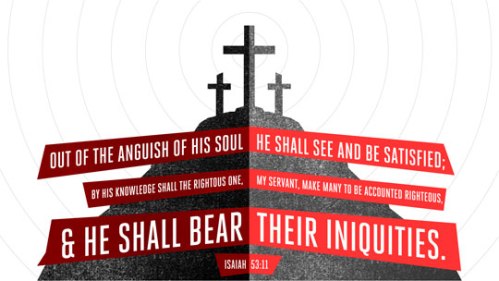
Isaiah-53.11-for-website

As we approach Good Friday and Easter, I wanted to post some resources on both Jesus’ death and resurrection.

I have presented a few messages on Jesus’ death, which are available at the West Bridgewater Community Church website.

I also have written two articles on Jesus’ resurrection and I have preached a few messages on the resurrection. These are also available on another page on the West Bridgewater Community Church website.

The resources on the resurrection focus on both the meaning of and evidence for this all-important event.

Book Review: No God but One

Introduction

Over the past fifteen years, there has been an increased interest in Islam in the Western world. Islamic terrorism, the rise of ISIS, the increased numbers of Muslims living in the West, and the rhetoric of political candidates have all generated more discussions of Islam. Some people dismiss Islam without knowing anything about it. Some people think Islam and Christianity are essentially the same. Those who are committed philosophical pluralists (to use a term employed by D. A. Carson) like to think both religions worship the same God. Those who are atheists dismiss both religions, asserting that both are equally false and equally destructive.

A greater understanding of the Islamic faith is needed. What does Islam teach about God? What do Muslims believe? What are the historical origins of this faith? What does the Quran teach? How does Islam differ from Christianity? What evidence is used to support the claim that Islam is true? These are the questions that should be asked and answered.

Fortunately, we now have an accessible, well-written book that answers these questions. Nabeel Qureshi, author of Seeking Allah, Finding Jesus[1] and Answering Jihad,[2] has written a third book that compares Christianity and Islam. His latest book is No God but One.[3] In the space below, I will summarize and critique this book. Most of this review will consist of summary, since the contents of the book are important. A short critique will follow.

I should state up front that I received a free copy of an advanced reading copy of this book from Zondervan in exchange for an honest review. Though not required to provide a positive review, I will say that I enjoyed this book enough to purchase my own copy on Amazon.com. (The advanced copy wasn’t the same as the published version, and I like to have books that I can cite in my writings. My purchase of the book is indicative of how useful I found the book to be—I plan on citing it in the future.)

Summary

Qureshi’s purpose in writing this book is rather straightforward: “In the course of this book, I hope to elucidate two overarching matters in particular: that the differences between Islam and Christianity have great implications, and that the evidence of history strongly supports the Christian claims” (page 13). Qureshi begins by mentioning the real-life case of a Muslim woman named Fatima who, while living in Saudi Arabia, became a Christian and was thus threatened by her brother, a zealous Muslim who demanded that she renounce her newfound faith in Christ. Fatima was now the possibility of dying because she moved from one religion to another. Who would die for believing one religion is true and the other religion is false?  Is this really something to die for? “Is the truth worthy dying for?” (21).

Qureshi lets that last question hang in the air as he begins this book. He then tells his own story of converting from Islam to Christianity. As a young college student, he was devoted to Islam. He had memorized portions of the Quran and he grew up attending Mosque. He came to Old Dominion University armed with arguments in support of Islam and against Christianity. Yet Qureshi made another student named David Wood, who was on the debate team with him. Wood, a committed Christian, started to informally debate against Qureshi. For Qureshi, the process of weighing the evidence in favor of Christianity and against Islam took four years, but in 2005, the year he graduated college, he became a Christian.

As a former Muslim and now a Christian (who, after completing an MD, decided not to pursue a career in medicine but rather a career as a Christian apologist), Qureshi is an ideal candidate to write a book comparing Christianity and Islam, because he does so with knowledge, understanding, and grace.

The book is devoted to two questions. Parts 1-5 answer the question, “Are Islam and Christianity really all that different?” Parts 6-10 answer the question, “Can we know whether Islam or Christianity is true?”

In Part 1, Qureshi begins to compare these two religions by sketching out their respective worldviews. Islam means “submission,” which is the relationship that Allah’s followers have to their God. They must submit to his sovereign will. According to Islam, “the fundamental problem of mankind is ignorance” (33). The solution is what to believe (aqeeda) and how to live (sharia). “Once people learn what to believe, aqeeda, and how to live, sharia, they will earn the pleasure of Allah” (33).

The major beliefs of Islam are six: “belief in Allah as the only God, belief in the prophets [(the greatest of which is Muhammad], belief in divinely inspired books, belief in angels, and the unseen, belief in the day of judgment, and belief in Allah’s predestining sovereignty” (33). These are the six articles of Islamic faith. Sharia is Islamic law, literally “way.”  “Sharia dictates virtually every respect of a devout Muslim’s life, from what foods to eat, to proper forms of currency, to exact words to recite during prayers” (34). The five most important practices of Islam are known as its five pillars: “proclaiming the Islamic motto, the Shahada: ‘There is no god but Allah, and Muhammad is His Messenger’; praying the five daily prayers; fasting during the month of Ramadan; giving alms; and undertaking a pilgrimage to Mecca” (34). It is important to observe that in Islam, on the day of judgment, those who have obeyed Allah will be rewarded. Salvation is through obedience, not through sheer grace.

In Christianity, on the other hand, God is love. This is only possible because God is triune. He is a trinity: One Being in three Persons (Father, Son, and Spirit). The fact that God is triune means he is inherently a community of love. Prior to the creation of the universe and of people, God is love, because the Father loves the Son, and the Son loves the Father, and they love the Spirit, and so forth. The same cannot be said of Allah.

Christianity states that the problem of mankind (and all of nature) is sin. Sin is “a rejection of the Source of Life” (35). It’s a turning from God. “It is rebellion against the Sustainer of the universe. It is the most destructive force in the cosmos, the ultimate root of every pained heart, every broken family, every pointless war, every heinous genocide. Sin spreads through generations like a malignant cancer, and it razes civilizations like a plague” (35).

The solution to this problem is what is called the gospel, which means “good news.” The good news is that God the Father sent God the Son into the world to live the life that we are incapable of living because of our sin and to die in place of sinners, bearing the holy and just condemnation that sin and sinners deserve. Not only did Jesus die on the cross in place of sinners, but he rose from the grave. Qureshi’s description of the significance of Jesus’ resurrection bears reading:

            From the perspective of a human watching Jesus, it might have looked like just another man dying just another death. So to prove to the world that His death was not just another death but one that brings life to the world, and to prove that He was indeed the God He claimed to be, He rose from the dead. On the one hand, this was a sign to all who were skeptical that Jesus truly has supernatural authority and deserves to be heard. On the other hand, it was a symbol for those who believe in Him that death has been defeated. Jesus has conquered it for us (36).

Salvation in Christianity is achieved by grace (it is a gift from God, not earned) through faith (those who believe/trust in Jesus are saved, not those who have done more good works than bad).

It should be clear how Islam and Christianity differ. In Islam, Allah is Unitarian (one God, one Person), whereas in Christianity, God is Trinitarian (one God, three Persons). In Islam, which denies original sin, the problem is ignorance, which is solved by right beliefs and right living (obedience to sharia). In Christianity, the problem is the power of sin, which has invaded the world and dwells within us. The solution is a rescue from God, who becomes man and lives a righteous life in our place (satisfying a holy God’s demands) and dies in our place (satisfying a holy God’s justice) and is raised to life (offering proof of who he is, what he’s done, and what he will do when he returns and all his followers are resurrected to eternal life). Additionally, Christianity teaches that God gives us himself: The third Person of God, the Holy Spirit, comes to dwell in Christians, empowering them to live a life pleasing to God. Islam teaches salvation is achieved through obedience, whereas Christianity teaches that salvation is through faith.

Since grace is a message Muslims struggle with, Qureshi spends some time defending it. “Herein lies the genius and infinitude of the love of God: He doesn’t draw the line [between mercy and justice]. He offers mercy to everyone who has ever sinned while also demanding justice for every sin ever committed” (41). Qureshi also states that the message of Christianity, particularly with regard to our problem and God’s solution, “resonates with reality” (45).

Thus ends Part 1 of the book. In Part 2, Qureshi compares the Islamic doctrine know as Tawhid with the Christian doctrine of the Trinity. Tawhid teaches that Allah is absolutely one. It teaches that there can be nothing else alongside of Allah that is eternal, including any attributes that are not eternal, or not part of his essence. This is significant with respect to the Quran, because some Muslims believe the Quran to be eternal and uncreated. In other words, it has always existed. But this threatens the doctrine of Tawhid! In fact, early in Islam, that belief regarding the Quran was condemned. But it has now become a majority view. The belief that Allah and the Quran are eternal is a contradiction to Tawhid.

Yet Muslims find the doctrine of the Trinity to be incoherent. They believe it “an indefensible, self-contradictory, polytheistic doctrine” (52). For this reason, Qureshi devotes a fair amount of space to the definition and defense of the Trinity. Since the Trinity is so essential to the Christian doctrine of God, it is difficult to say that Muslims and Christians worship the same God.

Part 3 of the book compares Jesus to Muhammad. While Muhammad is not analogous to Jesus in all ways (Muhammad is not God, nor is he eternal or a savior), Jesus and Muhammad are central to the Christian and Islamic faiths, respectively. Jesus is the God who, without forfeiting his divine nature, added a second nature, that of a human, when he entered into his own creation. He is both Savior and the ultimate exemplar. Muhammad, though only a prophet and not a savior figure, is the prime exemplar for Muslims.

In Part 4, Qureshi compares the Bible and the Quran. Muslims view the Quran with the utmost respect. They do not believe the Quran was in any way written by men or a man, but it was dictated to Muhammad, who preached these recitations (“Quran” means “recitation”), which were later written down. Muslims also believe that the Quran is only the word of God if it’s in Arabic, the language in which it was written. In other words, this book cannot truly be translated. “Muslims are hesitant to call non-Arabic versions of the Quran ‘translations,’ believing that there is mystical value and hidden meaning in the Arabic that cannot be translated” (106). By contrast, the Bible is the product of God and human beings. God is the ultimate and final author, but he wrote through human beings, using their personalities, experiences, and historical and cultural contexts to write what he wanted. It was written in history, as opposed to the belief that the Quran is eternal. Also, the Bible can be translated because it is the message of the Bible, and not any particular language, that is important.

Part 5 is devoted to a discussion of the Crusades. Though Qureshi does not aim to defend all that occurred in the Crusades, he does show them in context. The Crusades were conducted in response to Muslim attacks on so-called “Christian lands.” Muslims had attacked and conquered nations that had been predominantly Christian from the mid-600s well into the second millennium. “The reality is that the Crusades were launched in defense of the Byzantine Empire after two-thirds of the Christian world had been conquered by centuries of Muslim attacks. Muslims understood this and held no grudge against crusaders until modern times, when postcolonial narratives came into vogue” (133). Qureshi compares the violence inherent in Islam with the peacefulness of Christianity. He acknowledges that many—probably the vast majority of— Muslims are peaceful. But Muhammad and the early caliphs were not, and the Quran most certainly has passages that command violence. And these passages were not abrogated or limited to one time and place.

Clearly, the answer to the first question, which asks if these religions are different, is yes.

The second half of the book examines the truth claims of both religions. Qureshi identifies three central truth claims of Christianity: “(1) that Jesus died, (2) that He rose from the dead, and (3) that He is God” (153). The two central claims of Islam, beyond the existence of Allah as the one true God, is that Muhammad was a prophet and that the Quran is the word of God. These five truth claims are examined one by one in Parts 6-10 of the book.

In order to make this already long review shorter, I will move quickly through these parts. However, I should add that it was this part of the book that felt more coherent, and more central to the debate. It’s important to observe the differences between the religion (as Qureshi does in the first half of the book). But it’s more important to know whether one religion (or, at the least, some of one religion) is true.

That Jesus of Nazareth died on the cross in Jerusalem when Pontius Pilate was the Roman procurator of Judea is one of the surest facts of ancient history. Virtually no scholar denies this. Yet the Quran does deny that Jesus actually died on the cross. (It should be noted that in Islam, Jesus is not the Son of God, but he is a prophet. He was born of Mary and ascended into heaven, but, according to Islam, he did not die and therefore he did not rise from the grave.) Since all the evidence we have points to the fact that Jesus died on the cross, Islam is wrong in this regard.

Jesus’ resurrection is more debated. There are a number of biblical scholars who don’t believe that Jesus actually rose from the grave in a physical body. But the majority of scholars do agree on three basic points: (1) Jesus died, (2) his followers claimed that they had seen him after his death, and (3) some people who didn’t follow Jesus prior to his death (namely, Paul and James, but also Jude) claimed to have seen him after he died and their lives were changed. The only hypothesis that can adequately account for these facts is the resurrection. This is the argument made by Gary Habermas and Michael Licona, the argument known as the “Minimal Facts Approach.”

Muslims believe that Jesus’ message was somehow corrupted immediately after his ascension, but there is simply no evidence to support that view. Muslims believe that Paul corrupted Jesus’ message, but Qureshi shows that Paul had nothing to gain in doing so. Also, Paul’s message was the same as the message of Peter and the other apostles.

Qureshi demonstrates effectively that the consistent witness of the New Testament is that Jesus is God. This was not a claim fabricated by a later generation of Christians. It is demonstrated in the earliest gospel, the Gospel of Mark, as well as the latest one, the Gospel of John. It is also very clear in Paul’s letters, some of which are among the earliest Christian documents that we have.

These issues were not, for Qureshi, dry and academic. As he was weighing the evidence for Christianity, he realized that the evidence in favor of the truthfulness of this faith was very strong. But he still was reluctant to leave Islam. He had to consider, as objectively as possible, whether the evidence for Islam was as strong as the evidence in favor of Christianity.

Therefore, Qureshi considered whether Muhammad was really a prophet of God. He had been taught that Muhammad was meek, humble, a champion for widows and orphans, and a great leader of impeccable character. He had been taught that the Bible actually prophesied the coming of Muhammad (in Deuteronomy 18 and John 16, among other places). He had been taught that Muhammad had attained miraculous knowledge of science that would have been otherwise unknown in his day.

Yet when Qureshi examined these teachings, he found them not to be true. Muhammad may have been admirable in some regards, but he also was a man who committed great violence. He sent assassins to kill his enemies in their sleep. He punished his enemies by cutting off their hands and feet and branding their eyes with a hot iron, and had killed the men of a tribe while making slaves out of their women and children.  He allowed his men to rape female captives and he declared that women were mentally inferior to men. He even said the majority of those in hell would be women.

Qureshi easily shows that Muhammad was not the prophet prophesied in Deuteronomy 18 (that would be Jesus) nor is he the “paraclete” prophesied in John 16 (that would be the Holy Spirit). Furthermore, Muhammad did not have miraculous scientific knowledge. When we read passages from the Bible and the Quran in context, we see that the claims of Muslims are easily refuted.

Interestingly, there are some scholars who question whether Muhammad actually existed, given that most of our knowledge of him comes from the hadith, which are traditions of Muhammad’s life written down centuries after he lived. Qureshi boldly writes, “”There is almost nothing we can know with certainty about the historical Muhammad” (263).

Finally, Qureshi considers whether the Quran really is the word of God. Muslims claim that the Quran is the best piece of literature, so great that it must be of divine origin. They claim that there are prophesies in the Quran which have been fulfilled in history, that the Quran teaches knowledge that would not be discovered by scientists until centuries later, that there is something of a mathematical code in the text of the Quran, and that it has been perfectly preserved from error.

Qureshi shows that the first argument is completely subjective. Who is to say what is the best piece of literature? The prophesies that have been fulfilled in history are dubious, as is the so-called “science” of the Quran. The claim that the Quran evidences a mathematical structure can only be supported through a very selective sifting of evidence, and the Quran has actually been edited as late as the early twentieth century.

In short, the evidence in favor of the truthfulness of Islam is slim. Therefore, if one were to test both Christianity and Islam in as objective a manner as possible, one would discover that Christianity is true.

Qureshi ends by continuing the story of Fatima, the one that began the book. She was killed by her own brother because she became a Christian. Shortly before dying, she published a poem online. The last lines of that poem are:

My last words I pray to the Lord of the worlds,
Jesus the Messiah, the Light of Clear Guidance:
Change their heats and set right their discernment.
May he spread love among you, O Muslims (296).

Critique

Qureshi has written a book that is clear and accessible to the motivated reader. It is very difficult to summarize, compare, and then explore the veracity of two religions. Qureshi does so in as succinct a manner as possible, without sacrificing important details and all the while adding in enough autobiographical details to keep readers interested.

I could quibble with how he describes elements of the Christian faith, but, on the whole, Qureshi does a good job describing the basic elements of the faith. I trust he has done the same with Islam.

My main critique would be that I would like to see a more coherent structure in the first half of the book. I would also have appreciated a bit more history, particularly of the origins of Islam. If I were to write the book, I might have started there. He does discuss Islamic and Christian history throughout the book, but in not in the systematic way he discusses the Trinity and the identity of Jesus.

However, if Qureshi went into greater detail, whether discussing history or theology, the book would become much longer, and I’m sure that would attract fewer readers. Readers who demand more information will have to go elsewhere.

I have two critiques directed towards the publisher, Zondervan. One, the book has endnotes instead of footnotes. I don’t know why this is the case, since the number of notes is relatively small. As a reader, I detest flipping back and forth between the body of content and the endnotes. A second critique is that the book lacks indexes. There should be a subject index as well as index of Scripture (the Bible and the Quran). I believe that would make the book more useful as a reference.

However, even as it stands, No God but One is a valuable resource for those who want to know how Christianity and Islam differ and why anyone should adhere to either of these religions.

Notes

[1] Nabeel Qureshi, Seeking Allah, Finding Jesus: A Devout Muslim Encounters Christianity (Grand Rapids, MI: Zondervan, 2014).

[2] Nabeel Qureshi, Answering Jihad: A Better Way Forward (Grand Rapids, MI: Zondervan, 2016).

[3] Nabeel Qureshi, No God but One: Allah or Jesus? A Former Muslim Investigates the Evidence for Islam and Christianity (Grand Rapids, MI: Zondervan, 2016).